
The Story of Kekova: A Journey from Simena to the Sunken City
As the boat slows and the engine quiets, it's actually a signal: in just a moment, you'll be standing on a sunlit deck, looking down at the streets of a two-thousand-year-old city beneath your feet. Everyone who sees Kekova for the first time asks the same question — "How can this water be so clear, so still?" The answer lies in a story far older than you'd imagine, written jointly by earthquakes, limestone rock, and a sheltered bay. In this article, we'll explore both the geological secret behind this clarity and the tragic birth of the Sunken City. If you'd like to look beneath these waters yourself, a Kekova boat tour puts you right in the middle of this story.
The End of a Lycian City: How the Sunken City Was Born
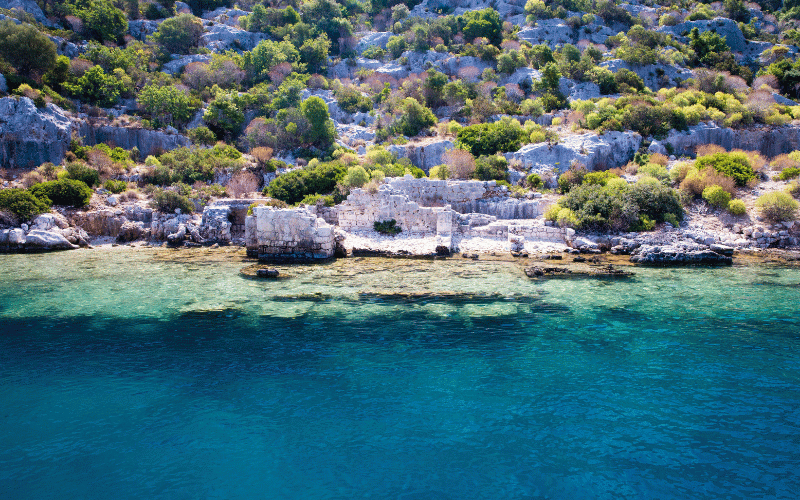
Kekova's story begins with a happy chapter. From the 4th century BC onward, the region was an important trading and harbor center of the Lycian Civilization. Thanks to its natural harbor, fertile coastline, and strategic location, the island — together with nearby settlements like Simena, Aperlai, and Teimiussa — built a thriving maritime civilization.
What Changed with the 2nd-Century AD Earthquakes?
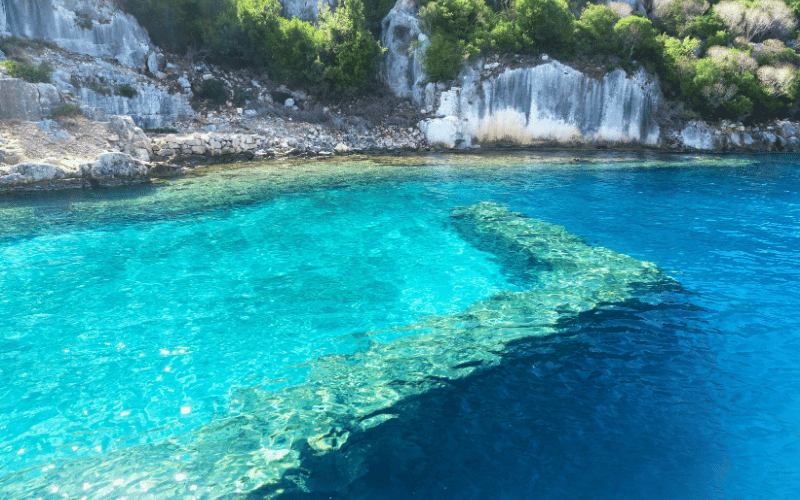
But the major earthquakes of 141 and 240 AD changed everything. The tremors split off a section of the coastline and pulled it beneath the sea; houses, staircases, and harbor structures along the northern shore gradually disappeared underwater. What we call the "Sunken City" today is the trace left behind by this geological disaster. For a more academic source on the region's history, you can explore the general history of the Lycian Civilization on Wikipedia.
Interestingly, this destruction also brought a form of preservation. Unlike structures on land, the submerged buildings were never looted, rebuilt, or built over. The sea essentially froze the city's fabric in place, like a time capsule.
The Secret of the Water: Why Is Kekova So Clear?
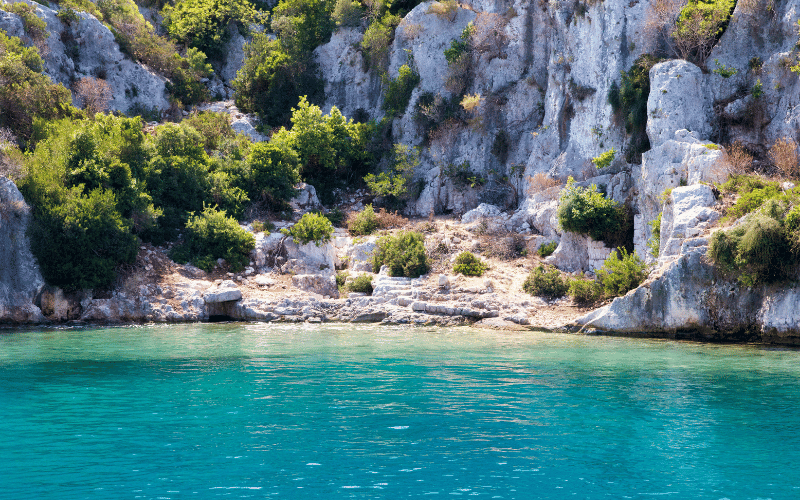
For most visitors, what captivates them even before the history does is the water itself. This clarity is no coincidence — it comes entirely from the region's geological structure.
A Karstic Coastline and Limestone Bedrock
Kekova and its surroundings sit on a classic Mediterranean karst landscape. This limestone-dominated terrain absorbs rainwater quickly into the ground, virtually eliminating the soil runoff that would otherwise cloud the surface. The absence of any major river or stream feeding into the area is also one of the key factors preventing sediment from mixing into the sea.
A Sheltered Bay and Calm Waters
Kekova Island acts as a natural barrier against the waves and currents of the open sea. The sheltered inner sea formed between the island and the coastline is almost as still as a lake. With minimal wave action, the seabed material stays undisturbed, allowing visibility to reach 15-20 meters in some spots. The region's designation as a Specially Protected Environmental Area in 1990 also played a major role in preserving this natural beauty by limiting construction and pollution.
💡 Captain Ergun's Tip: The water is clearest in the late morning, before the sun is directly overhead. Light enters the water at a steeper angle then, so you'll see the walls of the Sunken City far more clearly.
From Simena to the Sunken City: What Lies Beneath the Water?
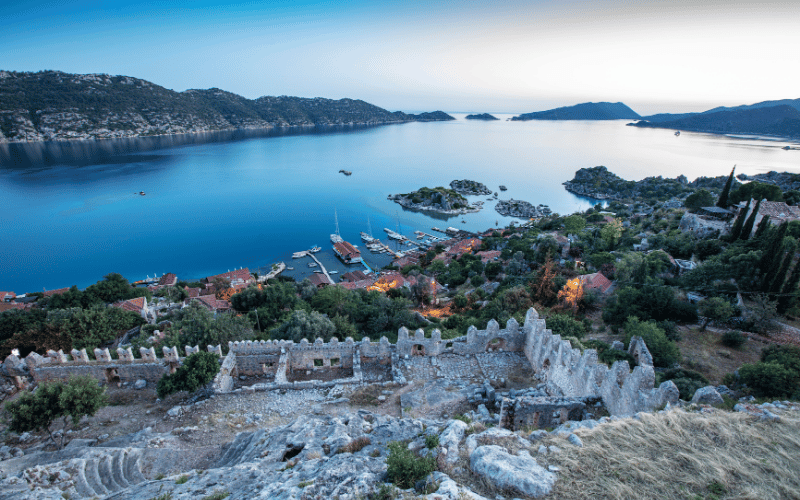
As you explore Kekova, history and nature blend seamlessly. To understand this unity, it helps to look at the route's two main stops.
Kaleköy and the Castle of Simena
Kaleköy, known in antiquity as Simena, is a Lycian settlement that's still inhabited today. Climb up to the castle on the hill, and you'll get the chance to look down over the entire Kekova bay and the shadowy shapes beneath the water. Simena isn't just a scenic viewpoint — it's a living page of history, having hosted civilizations from the Lycians to the Byzantines, the Genoese to the Ottomans.
Underwater Sarcophagi and Structural Remains
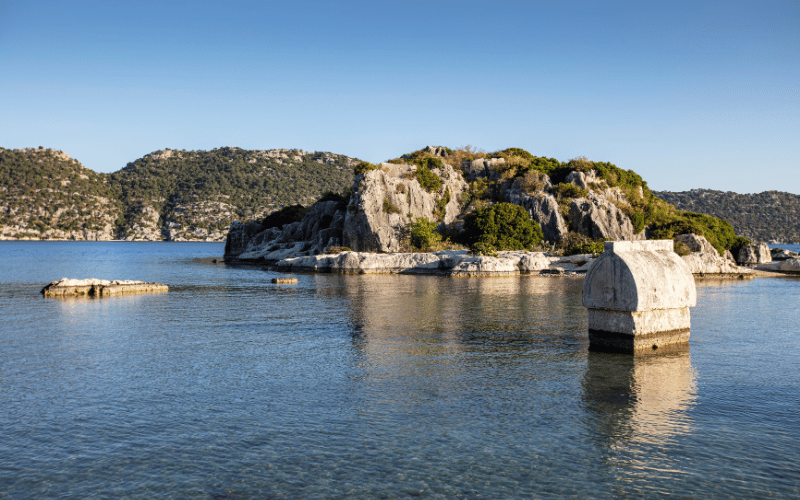
Right by the shore at Kaleköy, a Lycian sarcophagus can be seen half-submerged in the water — one of Kekova's most photographed details. A little further on, in the main Sunken City area, house foundations, staircases, and harbor quays are visible from the boat's deck. Swimming here is prohibited, as the goal is to protect these fragile ruins; still, viewing them from the boat while the captain narrates their story is an unforgettable experience in its own right. For detailed information on the region's archaeological status and preservation efforts, you can check [External Link: Ministry of Culture and Tourism].
For those who want to experience this blend of history and natural beauty firsthand, a Kekova boat tour dedicates the whole day to this very story.
💡 Captain Ergun's Tip: Don't just stop at the castle in Kaleköy — walk along the shoreline and see the underwater sarcophagus with your own eyes. Most visitors miss this detail.
Frequently Asked Questions
Is swimming allowed at the Kekova Sunken City?
No. The Sunken City area is under archaeological protection, so swimming and diving are prohibited there. The ruins can only be observed from a boat or from the castle above; this rule exists to ensure these fragile structures survive for future generations.
Does Kekova's water stay this clear all year round?
Generally, yes, because the main reason for the clarity is the absence of any river carrying sediment, combined with the karstic bedrock. That said, visibility tends to reach its peak during the summer months, when the sea is at its calmest.
How do you get to Kekova?
Since Kekova has very limited road access, the main way to reach the area is by sea. Boats departing from Kaş or Demre carry visitors to both the Sunken City and historic stops like Simena, making it the most natural and enjoyable way to explore the region.
Where History and Nature Meet
Kekova isn't just a beautiful bay — it's a living history museum, written by earthquakes, hidden by the sea, and preserved by nature itself. The only real way to understand this sleeping Lycian city beneath the clear water is to stand above it and listen to the captain's stories. If you'd like to experience this story in person, a Kekova boat tour takes you to this unique meeting point of history and nature.

AHOY!
I'm Captain Ergun, your local guide to the beautiful waters of Kaş and Kekova!
I'm here to help you make your trip to Turkey truly unforgettable. I've handpicked some of the best experiences for you, so you can dive deep into the culture, history, and natural beauty of our coast.
Check out my insider list of top activities and hidden gems for an adventure you won’t forget!