Kaş Boat Tour Guide: The Story Behind the Turquoise Waters
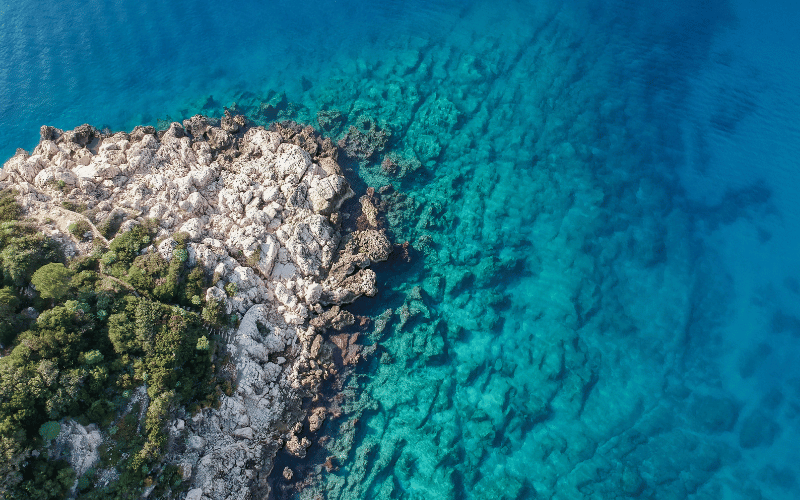
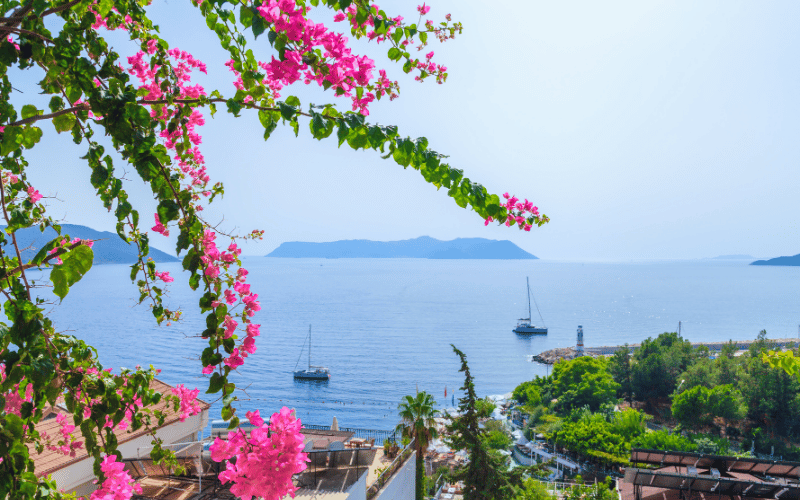
The boat slows down as it approaches a small cove, the engine noise fades, and for a moment everyone on deck falls silent and stares at the sea. Because right beneath you, there's water so clear you can count the details 15-20 meters down. For anyone seeing it for the first time, the sight feels almost unreal: "Is this water even real, or is there some kind of filter on it?" No filter — this is simply Kaş. In this article, I'll explain exactly what's behind this clarity, and how a Kaş boat tour lets you witness it up close.
Why Is the Sea in Kaş So Clear and Turquoise?
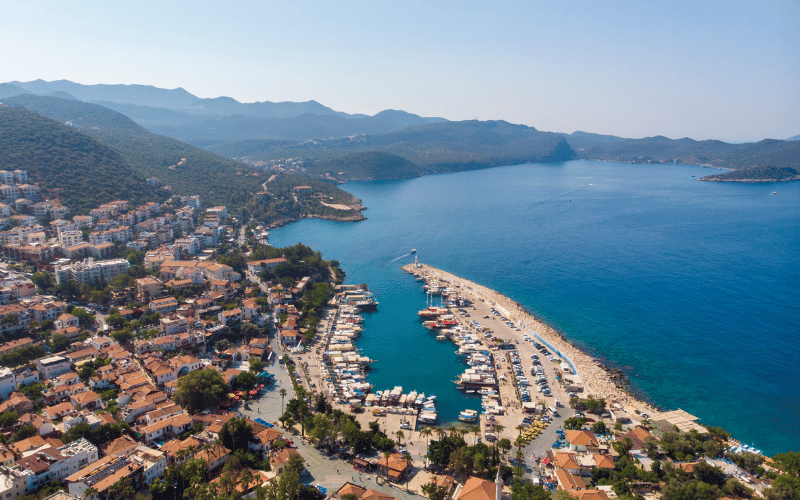
I have to say upfront — this isn't a coincidence. The coastline of Kaş sits on limestone bedrock and barely has any river mouths feeding into it. That means almost no soil, mud, or sediment ever washes into the sea. With nothing to cloud the water, it filters itself naturally, and combined with the white seabed sand, that's what creates the signature turquoise tone.
There's a second factor most people don't know about: the living carpet on the seafloor. And that brings us to one of the region's most special natural features.
Posidonia Oceanica: The Sea's Hidden Hero
A large part of the green patches you see in the water isn't ordinary seaweed — it's Posidonia oceanica, a seagrass species native to the Mediterranean. This plant photosynthesizes, releases oxygen into the water, traps suspended particles and lets them settle to the bottom, which boosts the water's optical clarity. It's also home to hundreds of marine species. In short, that incredible clarity you see is the work of a living ecosystem.
Kaş Through History: From Ancient Lycia to Today
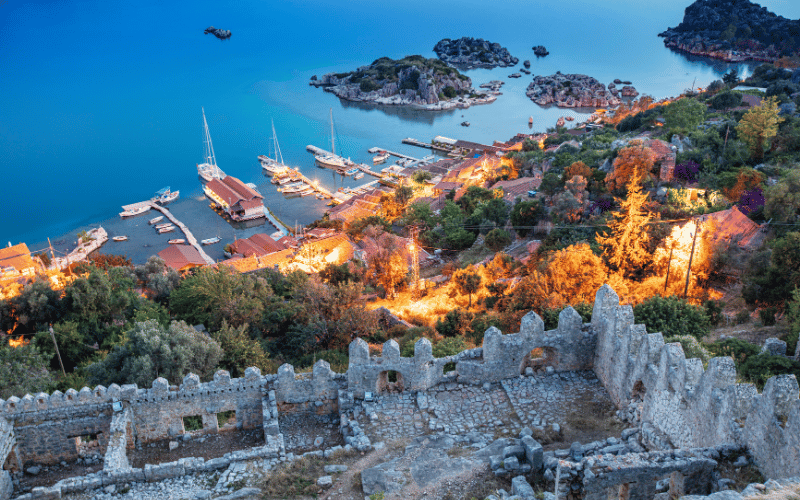
This land carries a history that goes far beyond its current image as a quiet holiday town. Traces of the ancient Lycian civilization are still visible today, from tombs carved into cliffs to remains of old harbors. The place that tells this historical story best is undoubtedly Simena. Now partially submerged, this ancient settlement offers a scene frozen in time — as you sail past, you can make out columns and staircases resting on the seabed below.
What to See on a Kaş Boat Tour
A typical day route usually brings together several stops: the calm coves of Kekova, the ancient castle hill of Simena, the fishing-village atmosphere of Üçağız, and a few hidden bays depending on the route. Each stop tells a different story, both historically and naturally. If you'd like to shape the route around your own interests, I recommend checking out a detailed Kaş boat tour program — you'll notice every cove has its own character.
A Whole Other World Underwater: Diving and Marine Life 🐢🐙
The real show in Kaş doesn't happen above the surface — it happens below it. That glass-like clarity you see from the boat isn't there for nothing; underneath, there's an entire underwater city, and it would be a shame to miss what's going on down there. With its clear waters and impressive visibility, Kaş has an almost legendary reputation among diving enthusiasts. The moment you put on a mask and dip your head in, you might feel like you've stepped straight into the middle of a nature documentary. Here's who's waiting to greet you underwater:
Groupers: The Grumpy-Looking but Curious Guardians of the Rocks
As you wander through the rocky reefs, you might come across a large, slightly grumpy-looking grouper. Their appearance can be intimidating, but they're actually quite calm and seem to enjoy watching you back. They usually wait at the mouth of a rock crevice, sizing you up, and barely move until you swim away.
Octopuses: Masters of Disguise
An octopus tucked into the rocks can instantly change its color and texture to pull off a perfect "you didn't see me" act. Spotting this camouflage trick takes a bit of attention, but once you catch one in the act, it's genuinely entertaining — it'll usually watch you for a few seconds before quietly slipping into another crevice.
Loggerhead Sea Turtles: The Luckiest Moment of the Tour
On a lucky day, you might lock eyes with a loggerhead sea turtle gliding slowly through the water. That feeling is honestly hard to describe — many guests call it the most unforgettable moment of the entire tour. If you do spot one, stay calm and keep your distance; it'll likely keep drifting along, giving you curious glances of its own.
Caves and Shipwrecks: Little Surprises Tucked Between the Rocks
Small caves along the coastline and scattered shipwreck fragments feel like little surprises hidden among the rocks. Around every corner, a different creature or texture might be waiting — so it's worth taking your time and keeping your eyes wide open as you go.
Posidonia Oceanica: The Quiet but Essential Hero
Don't forget the green meadows underwater either: they're not ordinary seaweed — they're Posidonia oceanica, a Mediterranean seagrass. It works almost like the sea's lungs, producing oxygen, and it's the real reason behind the fish diversity you'll notice. In other words, when you look beneath the surface, you're not just seeing a pretty view — you're looking at a living, bustling neighborhood.
Don't worry if you don't have a diving certification — snorkeling alone lets you experience a huge part of this world. A mask, a bit of curiosity, and the courage to get in the water is really all you need in Kaş.
💡 Captain Ergun's Tip: Even if you're just snorkeling, always ask about the wind direction before getting in. With a light northerly breeze, visibility usually reaches its peak, and the water gets that glass-like clarity.
💡 Captain Ergun's Tip: If you want to spot an octopus, get in the water in the afternoon, in coves with a rocky seabed. They tend to be shyer in the morning and a bit more active and visible later in the day.
Frequently Asked Questions
Why is the sea in Kaş so clear?
The lack of rivers in the region, the limestone structure of the coastline, and the Posidonia oceanica meadows covering the seafloor all filter the water naturally. Together, these three factors give the sea its remarkable clarity.
How long does a Kaş boat tour last?
A standard day tour usually lasts 6-7 hours; it typically starts in the morning, covers Kekova and the surrounding coves, Simena, and several swim stops, and returns to the harbor by late afternoon.
What's the best season for a Kaş boat tour?
The ideal window is between May and October, when the water warms up and the sea stays calm. In July and August, both air and sea temperatures peak, making the swim stops especially enjoyable.
Which coves are best for swimming in Kaş?
This varies depending on the route, but most boat tours anchor in calm, deep coves that offer both safe swimming and a striking view of the seabed below.
Time to See the Turquoise Waters Up Close
What makes the water in Kaş so special isn't just one thing — it's a combination of geology, seagrass meadows, and history all woven together. You can only describe it up to a point; to really feel its effect, you need to look down from the boat yourself. If you're ready to see it with your own eyes, you can check out current routes and schedules on the Kaş boat tour page and pick the day that works best for you.

AHOY!
I'm Captain Ergun, your local guide to the beautiful waters of Kaş and Kekova!
I'm here to help you make your trip to Turkey truly unforgettable. I've handpicked some of the best experiences for you, so you can dive deep into the culture, history, and natural beauty of our coast.
Check out my insider list of top activities and hidden gems for an adventure you won’t forget!