
When Do Caretta Carettas Visit the Turkish Coast?
When you gaze into the mesmerizing turquoise waters of the Mediterranean, you might find yourself locking eyes with a silent witness to a story that spans thousands of years rising from the depths. That shadow gliding gracefully beneath the waves is not just any sea creature; it is one of nature’s oldest and wisest guests. I am talking, of course, about the Caretta Carettas, or Loggerhead Sea Turtles. If you want to crown your holiday not just with the usual trio of sun, sand, and sea, but with a unique encounter with this miracle of nature, you need to be in the right place at the right time. Especially during the summer months in and around Kaş, spotting a turtle gently gliding beside the boat or popping its head out for a breath during a delightful Kekova boat tour is a moment that touches the soul and washes away the tiredness of the entire year.
In this article, speaking from a captain’s perspective, I will guide you through the life cycles of these adorable and protected residents of the Mediterranean, explain when you are most likely to see them, and how you can turn this encounter into an unforgettable memory. If you are ready, let’s steer our course towards the deep blue.
A Journey in the Wake of Sea Turtles on the Turkish Riviera
Although Caretta Carettas inhabit tropical and subtropical waters worldwide, the Mediterranean is an indispensable home for them. The Turkish coast, in particular, hosts critical nesting and feeding grounds vital for the continuation of their species. They are not merely passing migrants here; they are the true locals of these waters.
Places like the world-famous Iztuzu Beach in Dalyan, the Akyatan Lagoon in Adana, and the pearl of Antalya, Çıralı, are their well-known maternity wards. However, topping this list with both its historical texture and endless sandy shores is Patara Beach. Patara is one of the most special beaches in the world, where Caretta Carettas have instinctively returned to lay their eggs for millions of years. While these sandy stretches are sensitive points where turtles come ashore, seeing them swimming freely in the open sea offers a completely different kind of excitement.
The bays around Kaş and Kekova are veritable paradises for nature lovers who wish to encounter a Caretta Caretta gliding in its natural habitat, the open sea. In waters as clear as an aquarium, having a turtle pass by while your boat is anchored reminds you that you are a part of nature. That is why our routes are never just about history and swimming breaks; they are also stops for greeting these magnificent creatures.
Nesting and Hatching Season: Nature’s Calendar
The visitation schedule of Caretta Carettas to our shores depends on a very precise biological clock. Knowing this cycle is important both for respecting them and for increasing your chances of spotting one.
Adult female turtles return to the beaches where they were born towards the end of May. The period between late May and the end of July is their nesting season. Under the cover of darkness, females come ashore, dig nests with their hind flippers, leave about 100 ping-pong ball-sized eggs, and return to the sea. This ritual can be repeated several times in a single season.
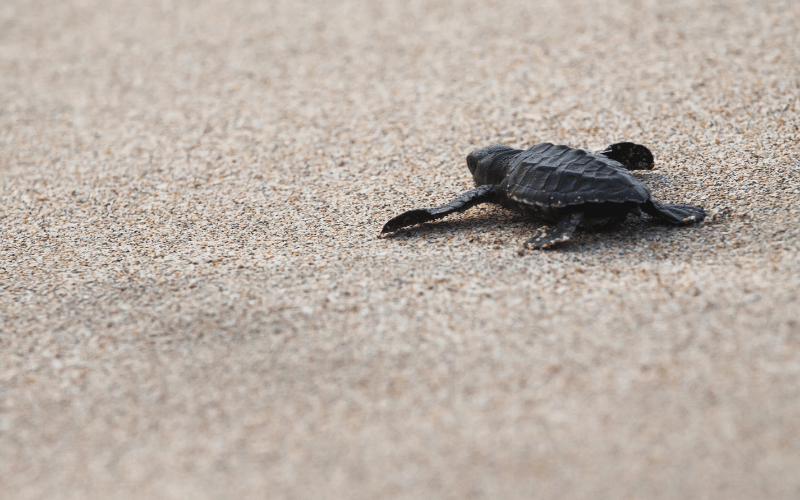
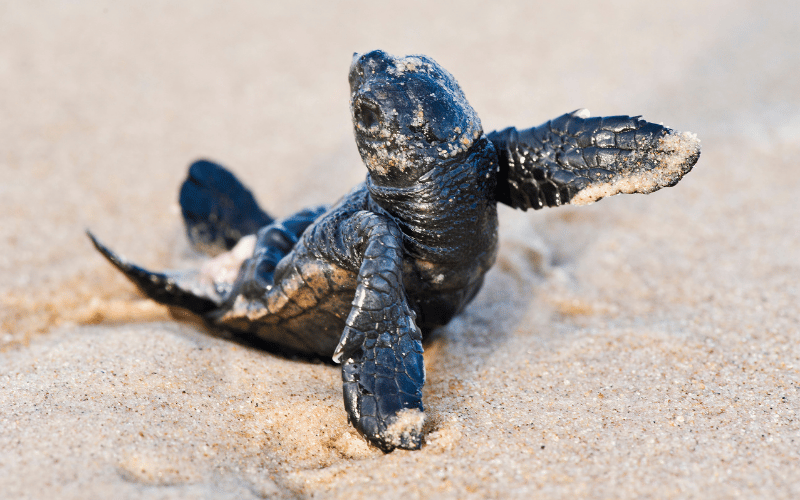
However, the real miracle happens between late July and early September. The hatchlings, having completed their incubation period, usually emerge from beneath the sand in the cool of the night. Guided by the moonlight or the glimmer of the sea, they begin their arduous journey towards the water with tiny steps. During this period, it is vital not to use artificial lights on the beaches, make noise, or dig up the sand. A wrong light source can cause the hatchlings to lose their way and perish before ever reaching the sea.
The Wise Travelers of the Sea: Life Cycle and Diet
When you encounter a Caretta Caretta, remember that you are looking at a living history that can live for 60 to 70 years on average. Although their hard and sturdy shells protect them from external dangers, their biggest enemies are unfortunately human-induced waste and habitat loss.
These creatures are the ecosystem engineers of the seas. Thanks to their strong jaws, they can eat crustaceans, crabs, and fish. However, their favorite food is jellyfish. By keeping the jellyfish population in balance, they protect the ecological health of the sea. So, if you encounter fewer jellyfish while swimming, you owe a debt of gratitude to them.
After reaching the sea as hatchlings, they enter a period known as the "lost years" and venture into the open oceans. Where they go and where they live until adolescence remains partly a mystery to scientists. However, females maturing after about 20-25 years return to the very beach where they first entered the water to lay their eggs, using an incredible navigation ability. This cycle is an unerring law of nature.
💡 Captain Ergun's Advice:
"If you want to see a Caretta Caretta in its clearest form above the water, the early morning hours are worth their weight in gold. When the sea is 'smooth as a sheet,' meaning there are no waves or wind, it is much easier to spot that tiny head they pop out to breathe. Especially when we turn off the engine in a quiet bay, silence prevails; at that moment, you might even hear the sound of their breathing. In the heat of the noon sun, they like to dive deep and cool off just like us, but they love to sunbathe on the surface in the morning calm. Keep your eyes on the horizon!"
Encountering Caretta Carettas on Boat Trips
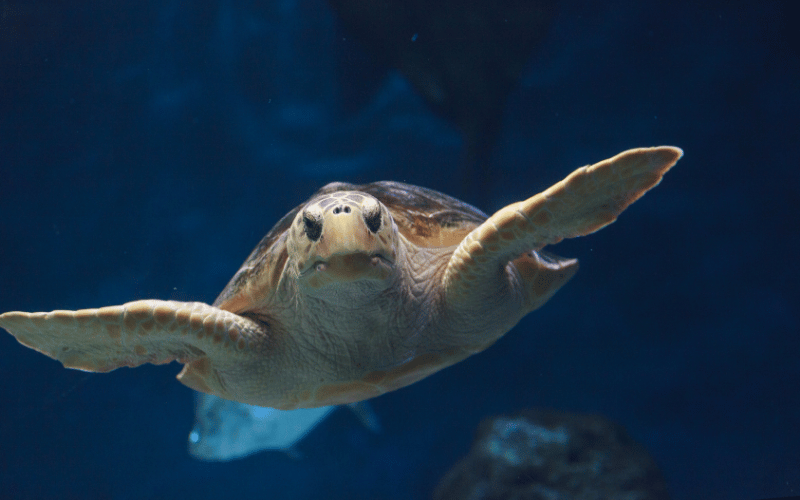
There is a mountain of difference between watching nature on a documentary screen and living inside it. On our Kekova boat tour experiences, the moments our guests get most excited about are often not just the mystery of the Sunken City, but the pure joy created by a Caretta Caretta appearing around the boat.
The period between June and September is the most active time, seeing both active adults and hatchlings meeting the sea. The probability of an encounter during tours in these months is very high. Turtles generally do not run away from boats; on the contrary, they sometimes approach with curiosity. However, the important thing here is not to touch them and not to disrupt their natural behavior. Our boats follow a course that respects their habitats and avoids noise pollution. The shallow areas around Simena Castle are particularly frequent pastures where they stop to feed.
This journey you embark on with Boat Trip Turkey is not just a swimming tour, but also a trip of ecological awareness. On our route, we enjoy the pleasure of watching them from a distance with love, without disturbing their natural environment.
Frequently Asked Questions About Caretta Carettas
What are the best hours to see Caretta Carettas?
Since Caretta Carettas breathe air through lungs, they are compelled to surface at certain intervals. Early morning hours, when the sea is calm, are the ideal moments to spot them. Additionally, towards sunset, when sea traffic decreases, they also enjoy swimming close to the surface.
Do Caretta Carettas harm humans?
Caretta Carettas are extremely docile and peaceful creatures. They do not have a habit of attacking humans. However, if they feel threatened or if people try to touch them, they may react defensively. It is always best to remember they have strong jaws and to watch them from a safe distance.
What should we do if we see a turtle on the boat tour?
If you encounter a Caretta Caretta while on the boat or swimming, first, stay calm and avoid sudden movements. do not try to touch it, just watch. If the boat is moving, your captain will already put the engine in neutral to prevent the propeller from harming the animal. Enjoying this moment in silence is the most beautiful way.
What do Caretta Carettas eat?
These creatures can be both carnivorous and herbivorous, but the majority of their diet consists of jellyfish, crabs, oysters, sponges, and various fish species. They possess very strong jaw muscles to crack hard-shelled sea creatures.
When do baby Caretta Carettas hatch?
The hatching period for the babies usually begins in late July and continues until mid-September. These emergences generally occur during the night hours or towards dawn when the sand is cool.
Why is Patara Beach important for Caretta Carettas?
Patara Beach has perfect conditions for turtles to nest with its fine sand and wide coastline. Being one of the most important breeding grounds in Turkey, Patara is under protection, and beach usage is restricted to certain hours during nesting periods.

AHOY!
I'm Captain Ergun, your local guide to the beautiful waters of Kaş and Kekova!
I'm here to help you make your trip to Turkey truly unforgettable. I've handpicked some of the best experiences for you, so you can dive deep into the culture, history, and natural beauty of our coast.
Check out my insider list of top activities and hidden gems for an adventure you won’t forget!