
Lionfish: The Dazzling Invader of the Mediterranean
In the deep blue waters of the Mediterranean, a striking yet dangerous marine creature has become increasingly common in recent years: the Lionfish. At first glance, this species captivates with its impressive colors, fan-like fins, and elegant posture. However, it's not just its visual appeal but also its impact on the marine ecosystem that has brought it into the spotlight. Once found only in the warm, tropical waters of the Indo-Pacific, lionfish are now frequently seen along the Mediterranean coasts, especially in southern Turkey. The potential problems this seemingly captivating species can cause for the natural balance must be taken very seriously. In this article, we'll explore how this impressive but invasive species arrived in the Mediterranean, its effects on marine life, and its place within sustainable tourism.
What is a Lionfish and Where is it Found?
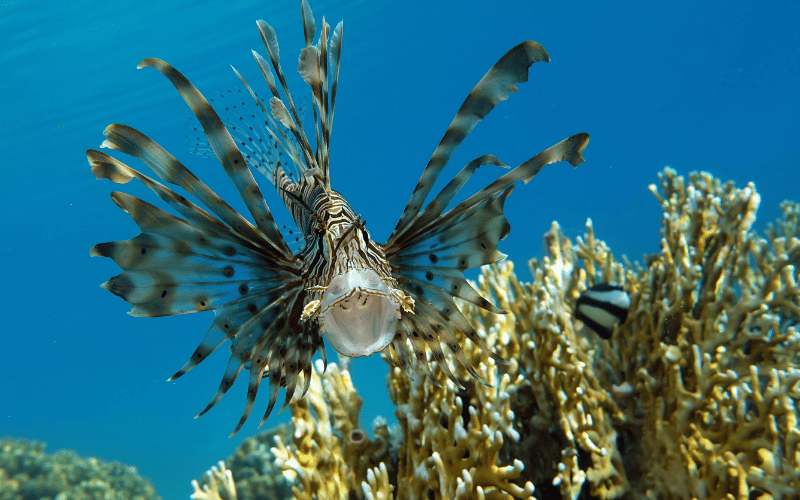
The Lionfish (scientifically Pterois miles or Pterois volitans) is a striking predatory fish species that inhabits warm seas. It's generally recognized by its body adorned with red, white, and brown stripes, and its long, venomous spines. The long spines found on its dorsal, pelvic, and anal fins can deliver venom when touched, serving as both a defense mechanism and a warning to potential threats. While this venom is not typically life-threatening to humans, contact can lead to intense pain, localized swelling, and in some cases, allergic reactions. Lionfish usually live around rocky areas, coral reefs, shipwrecks, and complex underwater structures. These environments provide them with both hunting advantages and hiding spots. Today, they are frequently observed in areas like the Gulf of Antalya, off the coast of Mersin, the shores of Muğla, and around Kaş and Kekova. Divers, especially during the summer months, have a high probability of encountering this fish.
How Did It Arrive in the Mediterranean?
The arrival of the Lionfish in the Mediterranean occurred through the Lessepsian Migration, considered one of the significant migratory events in ecosystem history. This migration resulted from the opening of the Suez Canal in 1869, which connected the Red Sea and the Mediterranean. Several species native to the Red Sea’s warm, saline waters have migrated through the Suez Canal, eventually establishing themselves in the Mediterranean. The Lionfish is one such migrant species. The Mediterranean's waters, particularly in the Eastern Mediterranean, have a temperature and structure similar to tropical waters, allowing this species to adapt easily. The lack of natural enemies, combined with plentiful food, has allowed lionfish populations to expand rapidly and unchecked across the region. Initial observations were typically made off the coasts of Israel, Lebanon, and Cyprus, after which they spread towards the Turkish shores. Today, it's possible to encounter this fish species in a large portion of the Mediterranean.
Impacts on the Ecosystem
While each species contributes to the balance of an ecosystem, it turns into a threat when it disrupts native populations and undermines local biodiversity. Lionfish exemplify this kind of ecological threat, putting significant strain on the balance of the Mediterranean marine environment. One of the most significant characteristics of this species is its high reproductive capacity. A single female lionfish is capable of producing up to two million eggs each year, contributing significantly to rapid population growth. The eggs drift in the water column, spreading over vast areas. This leads to rapid and uncontrolled population growth. Additionally, the Lionfish is a very voracious predator. It preys heavily on young fish, small invertebrates, and native marine species, putting intense pressure on local ecosystems. This predatory pressure can lead to the complete disappearance of some native species. In the long term, this situation can cause disruptions in the food chain, a decrease in biodiversity, and instability in the ecosystem. Endemic species and local fishing resources, in particular, are directly affected by this change.
Venomous Spines and Safety Risk
The spines on the dorsal and pelvic fins of the Lionfish carry venom that causes severe pain upon contact. These spines serve not only as a defense against predators but also as a warning that humans should be cautious. They can pose a risk, especially for unaware divers or children playing in the sea. In cases of envenomation, symptoms such as nausea, dizziness, and rarely fainting may occur in addition to pain. Therefore, it is crucial for individuals encountering Lionfish to keep a distance without touching them and to avoid untrained intervention.
Potential Benefits and Economic Value
Despite all its harms, the meat of the Lionfish is edible and quite delicious when properly prepared. This characteristic is valuable, especially in encouraging its harvesting for population control purposes. In some regions, this fish has started to appear on restaurant menus, gaining gastronomic value. At the same time, observing this fish in its natural habitat during tourist dives can offer an interesting experience for nature lovers. However, this situation needs to be managed carefully and controllably to ensure it does not become a factor that encourages the spread of the fish.
Population Control: What Should Be Done?
The rapidly increasing population of the Lionfish can only be controlled through conscious and coordinated interventions. At this point, both diving tourism and local fishing can play important roles. Spearfishing by trained divers is an effective and direct control method in areas where the species is found. Additionally, educating local communities about this fish, encouraging its consumption, and serving it in restaurants are also effective methods. In this context, sharing recipes, organizing promotional campaigns, and especially emphasizing food safety are important. Similarly, raising public awareness and providing training for divers form the basis of the measures to be taken.
Awareness in the Seas with Boat Trip Turkey
At Boat Trip Turkey, we attach great importance to the protection of our seas and the promotion of sustainable tourism. During our boat trips, we not only offer an unforgettable holiday experience but also adopt a sensitive approach that will not harm marine life. We inform our guests about the impacts of invasive species like the Lionfish on the marine ecosystem, aiming to raise awareness. While it's possible to encounter this species during our tours, we provide clear guidance on how to interact with it. Because we believe that preserving the balance in the seas is the shared responsibility not only of us professionals but of all visitors and nature lovers.
Ready to explore the beautiful Turkish coastline while learning more about its marine life and contributing to its preservation? Contact us to book your unforgettable boat trip experience!

AHOY!
I'm Captain Ergun, your local guide to the beautiful waters of Kaş and Kekova!
I'm here to help you make your trip to Turkey truly unforgettable. I've handpicked some of the best experiences for you, so you can dive deep into the culture, history, and natural beauty of our coast.
Check out my insider list of top activities and hidden gems for an adventure you won’t forget!