
Kekova Boat Tour: Can You Swim in the Sunken City?
There is a turquoise dream stretching between Kaş and Demre on the western coast of Antalya: Kekova. This is one of the most mysterious and fascinating corners not only of Turkey but of the entire Mediterranean basin. A history that has been sleeping silently in the middle of the sea for centuries... The stairs, house foundations, and amphorae resting under the crystal-clear waters, which many of us see in holiday photos, fascinate visitors at first sight.
I know very well the look of astonishment on the faces of our guests approaching this region on our Kekova boat tour starting from Kaş Harbour. When they look down from the deck of the boat, they see every stone and every detail on the bottom thanks to the "glass-like" structure of the water. And on almost every tour, faced with this mesmerizing view, the following question is asked: "Captain, this looks like a corner of paradise! Can we jump into the water and touch those stairs? Is swimming allowed over the Sunken City?"
The answer is a big and definite "No". Swimming, diving, and stopping boats are strictly forbidden over the Sunken City (Dolchiste) along the northern shores of Kekova Island. But why? Why is swimming prevented in such a clear sea? Is this ban just a simple safety measure, or are there much deeper historical and ethical reasons behind it?
In this guide, as a Kekova enthusiast, I will tell you the story behind this "forbidden paradise" and give you tips known only to locals on how to visit this route from Kaş in the most efficient and enjoyable way.
Dolchiste: The Tragic Story of a Civilization Under Water
The place known today by tourists as the "Sunken City" was actually a vibrant Lycian settlement known as "Dolchiste" in ancient times. Stretching along the northern shores of Kekova Island facing the mainland, this settlement was a haven for sailors and the heart of trade thanks to its strategic location. It was a living city full of houses displaying the finest examples of stone masonry, shops, cisterns, and places of worship.
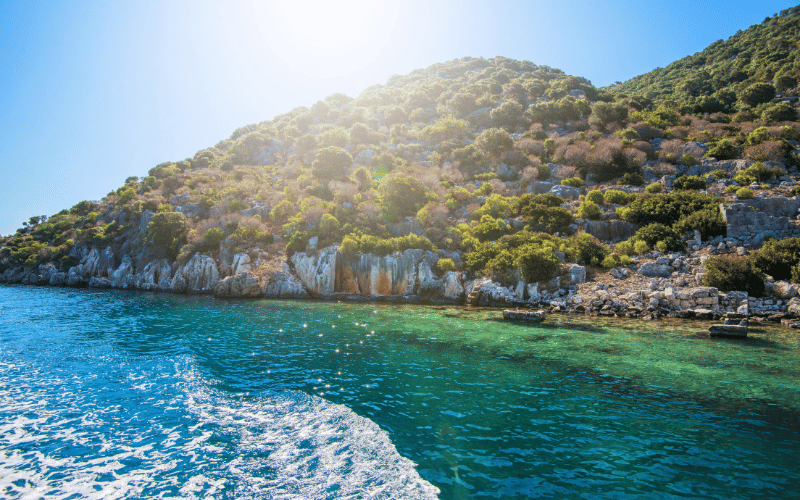
However, the severe earthquakes that occurred in the 2nd century AD and radically changed the geography of the region sealed the fate of Dolchiste in a single night. This piece of land, an extension of the Taurus Mountains, slid towards the sea due to tectonic movements, and a large part of the city was buried underwater. The half-submerged stairs you see on the shore while passing by boat today are actually the steps people once used to climb to their homes. The structures under the water are the remains of warehouses, shops, and the harbor.
This is not a man-made museum or a movie set. It is a real time capsule where the power of nature and history are frozen. It is this feeling of "lived-in" history that distinguishes Kekova from other sunken cities in the world.
Why Was Swimming Banned in the Sunken City?
Let's get to the main issue. Until the 1980s, swimming in the region and even camping on the island were allowed. However, increasing tourism and, unfortunately, the destruction caused by human factors mobilized the authorities. In 1990, the Ministry of Culture and Natural Heritage Preservation Board declared the Sunken City shores of Kekova Island a "1st Degree Archaeological Site" (Special Environmental Protection Area). Here are the three main reasons behind this strict ban:
1. Preserving Historical Heritage and Preventing Damage
Although the ruins under the water have been there for thousands of years, they are structurally quite fragile due to the effect of salt water and time. Human intervention, fin kicks, turbulence created in the water, or even just touching a wall out of curiosity can cause these delicate structures, mosaics, and amphorae to be damaged or even collapse. In order to transfer this historical texture to future generations as it is, it is mandatory to "reduce human contact to zero".
2. Preventing Artifact Smuggling and Destruction
Unfortunately, in the past, when swimming was free in the region, sad incidents occurred. It has been determined that small historical objects under the water (coins, ceramic pieces, amphora handles, etc.) were taken unconsciously or with bad intentions as "souvenirs". Kekova is an open-air museum, and moving even the smallest stone from here is a crime. The swimming ban is the most effective method to prevent the loss of even the smallest piece in this open-air museum.
3. Boat Traffic and Safety
Kekova witnesses very heavy boat traffic, especially in the summer months (July-August). The shores of the Sunken City are a narrow corridor where boats cruise slowly. It is a very high risk for someone swimming in this area not to be noticed by the boats. To prevent life-threatening dangers such as propeller accidents, it is strictly forbidden for boats to stop, anchor, or drop off passengers here.
Captain Ergun's Tip: "To fully feel that magical atmosphere during the Sunken City crossing, focus only on the sea. Thanks to the clarity of the water, you will see the historical stairs and structures on the bottom clearly, as if you could touch them with your hand. The pleasure of watching this view with the naked eye is something else entirely."
How Can You Explore the Sunken City?
Do not think, "If swimming is forbidden, what will we see?". Despite this ban (or perhaps because of it), the Sunken City tour is one of the most impressive experiences you can have in your life. Watching history from the boat is much more vivid and real than visiting a museum behind glass.
When our boats departing from Kaş reach the region, your captain idles the engines in line with the Sunken City. The boat glides silently over the water at almost walking speed. If you are lucky and find yourself on a glass-bottom boat, you can watch history slipping under your feet. However, even on a standard boat, thanks to the clarity of the water, you can see the royal tombs, harbor stones, and church ruins down to a depth of 5-6 meters with the naked eye.
Alternatives for Swimmers: Bays Where You Can Swim with History
"But Captain, won't we swim at all? Did we come all this way just to look?" I can hear you saying. Of course, you will swim! The ban only covers the coast of the island where the historical ruins are most dense. Just after or before the Sunken City crossing, wonderful bays await you where swimming is allowed and the water is no different from crystal.
Tersane Bay: Where the Ban Ends
This is like the only exception to the Sunken City ban. Located at the western tip of Kekova Island, Tersane Bay was a region where ships were built and repaired in ancient times (known as "Xera"). This is the only point on the island where swimming is allowed. There are still ancient building ruins and a Byzantine church apse on the beach and in the shallow water. So, while swimming here, you are literally swimming in the middle of history.
Aquarium Bay: The Most Vivid Form of Turquoise
As the name suggests, it is a bay covered with white sand at the bottom, giving the feeling that you are swimming inside an aquarium. Usually, a break is taken here after the Sunken City crossing. The color of the water is so vivid and clear that you can see the shadow of the boat hitting the sand at the bottom from meters above. This place is perfect for taking photos and watching the underwater world with a mask.
Captain Ergun's Tip: "Make sure to take your sea goggles or mask with you when entering the sea during our swimming break in Tersane Bay. This place is not just for cooling off, but a unique opportunity to swim over history. Swimming while watching the ruins on the bottom thanks to the clarity of the water will give you much more than ordinary sea pleasure. Enjoy swimming intertwined with history."
Frequently Asked Questions
I have detailed the most frequently asked questions from our guests planning to come to the region below to eliminate confusion.
Is Kayaking Allowed Over the Sunken City?
Although large boats are forbidden to stop, sea kayak tours accompanied by licensed guides are allowed. However, entering the water is strictly forbidden even when kayaking.
Where Does the Kekova Tour Start?
Our tours depart from Kaş Harbour in the morning hours. A pleasant cruise from Kaş to Kekova is part of the tour.
Is Simena (Kaleköy) Included in the Tour?
Yes, our boats usually take a 1-hour break here. You can climb to the castle, see the sarcophagi, and swim.
Is a Museum Pass Required?
It is not required for the boat tour. However, if you want to climb to the castle during the Kaleköy (Simena) break, the Museum Pass is valid.
This ban, imposed to protect history, does not change the fascinating atmosphere of Kekova; on the contrary, it adds mystery to it. To see the Sunken City up close, listen to its story, and enjoy swimming in the permitted bays, you can book your spot immediately on our Kekova boat tour page.

AHOY!
I'm Captain Ergun, your local guide to the beautiful waters of Kaş and Kekova!
I'm here to help you make your trip to Turkey truly unforgettable. I've handpicked some of the best experiences for you, so you can dive deep into the culture, history, and natural beauty of our coast.
Check out my insider list of top activities and hidden gems for an adventure you won’t forget!